
Pocket Spring Recycler
An Australian First: Soft Landing’s Pocket Spring Recycler
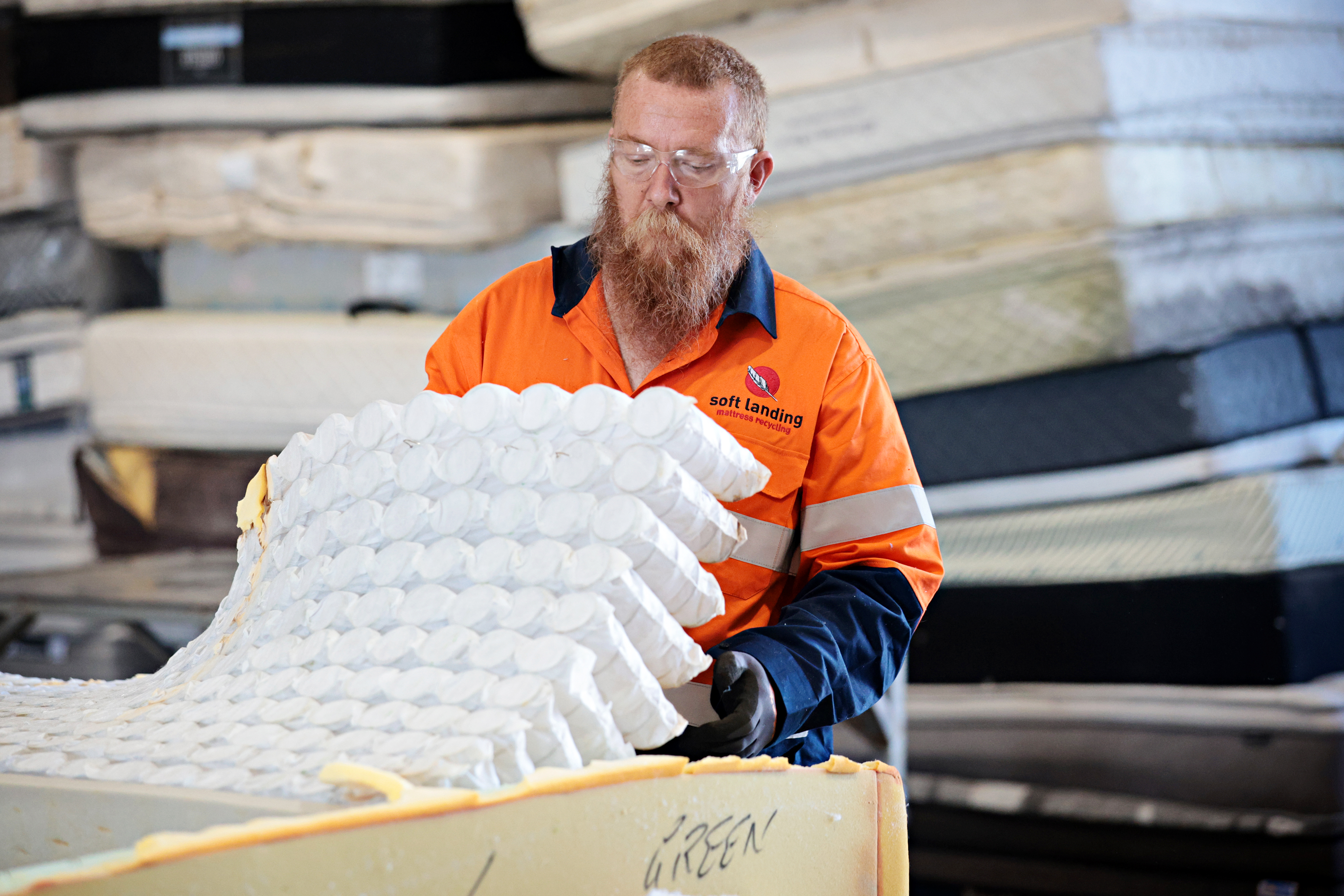
Pocket spring mattresses have become one of the biggest technical and commercial challenges facing mattress recycling. Unlike traditional spring units, pocket springs contain hundreds of individual steel coils encased in polypropylene fabric.
The design has become increasingly popular in mattresses because each spring can move independently, but at end of life it creates a difficult combination of two otherwise recoverable materials that are tightly bound together.
The problem is growing quickly. The Australian Bedding Stewardship Council (ABSC) estimates that pocket springs now make up around half of mattresses presented for recycling and could account for 80–90% within five years. At Soft Landing, they already represent around 45% of our downstream steel stream and are continuing to increase.
Mattress spring steel is a valuable recyclable material, but polypropylene left attached to pocket springs can contaminate the steel stream. As requirements from downstream steel processors have become more stringent, contaminated mattress steel can be devalued or rejected altogether. The ABSC has identified this as a growing national challenge, with some recovered mattress steel ending up stockpiled or in landfill because it cannot meet downstream specifications.
For mattress recyclers, that creates both an environmental and a commercial problem: valuable steel can be lost from the recycling system, while recyclers can face additional processing or disposal costs.
“Pocket spring mattresses are becoming an increasingly significant part of the waste stream, and the way they were traditionally handled was becoming less sustainable. We needed a solution that would improve the quality of the material we recover and give us stronger, more reliable downstream options.”
David Petrie General Manager Soft Landing


Enter the Pocket Spring Recycler.
Rather than treating the steel and fabric as one difficult mixed material, the Pocket Spring Recycler mechanically separates the pocket spring units, producing two distinct material streams.
The result is:
Cleaner steel: removing the polypropylene produces a much cleaner steel stream, improving its value and its suitability for downstream steel recycling while reducing the risk of loads being rejected. Early operational trials at Smithfield have produced excellent-quality recovered steel.
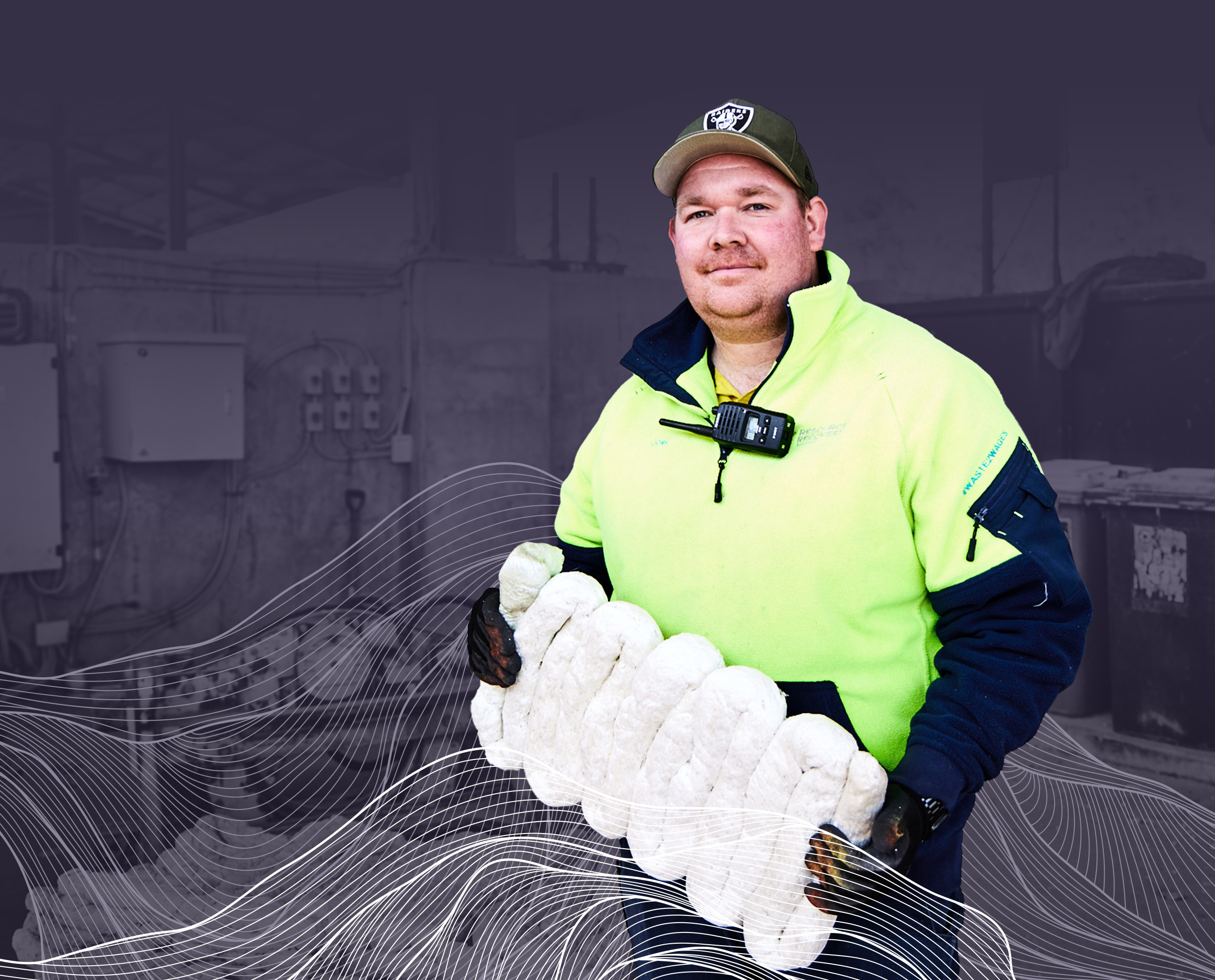
A separate polypropylene stream: instead of remaining wrapped around the steel as contamination, the polypropylene is separated into its own material stream, creating the opportunity for a dedicated recycling or recovery pathway.
A more resilient recycling process: reducing contamination and disposal exposure strengthens the commercial viability of processing pocket springs and helps Soft Landing maintain material recovery as these mattresses make up an increasingly large share of the waste stream.
Soft Landing’s machine is the first installed outside the United States, where it was developed after several years of testing and refinement.
“As more pocket spring mattresses reach the end of their life, the ability to produce clean, marketable materials will become increasingly important,” David says.
“Our investment is a game changer for mattress recycling in Australia. By solving one of the industry’s most complex recycling challenges, the technology significantly improves resource recovery and helps close the loop on mattress waste. It is a clear demonstration of Soft Landing’s commitment to innovation, giving our customers confidence that they are partnering with an organisation that is setting new benchmarks for environmental performance, circular economy outcomes and social impact.”
David Petrie General Manager Soft Landing