
Waste to Energy Trial
Towards 100% Landfill Diversion with Waste-to-Energy
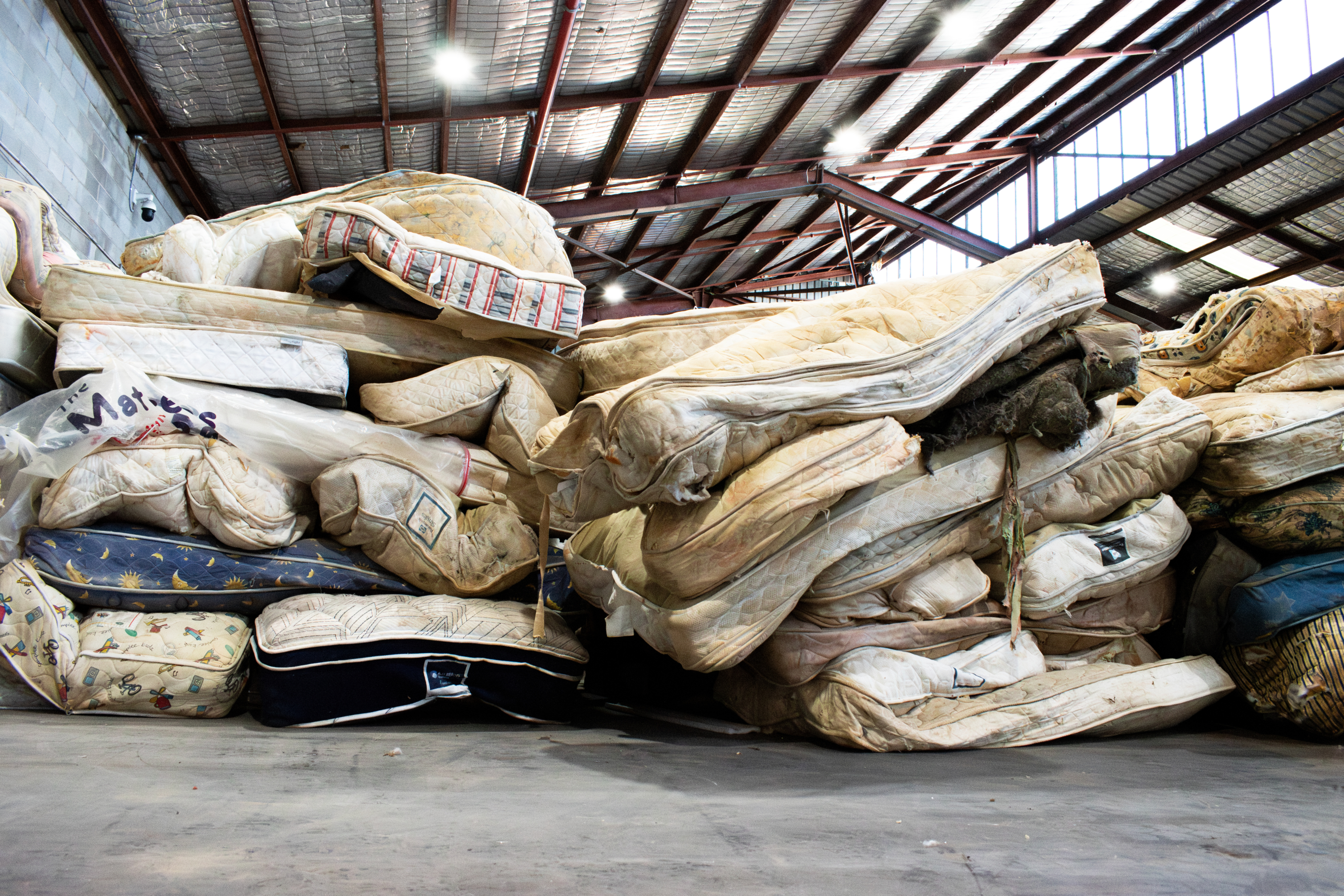
Picture 740,000 discarded mattresses filling up landfills across Australia each year; a mountain of bulky waste decomposing over decades. For councils aiming for 100% diversion targets, it's a headache. For us? It’s an opportunity.
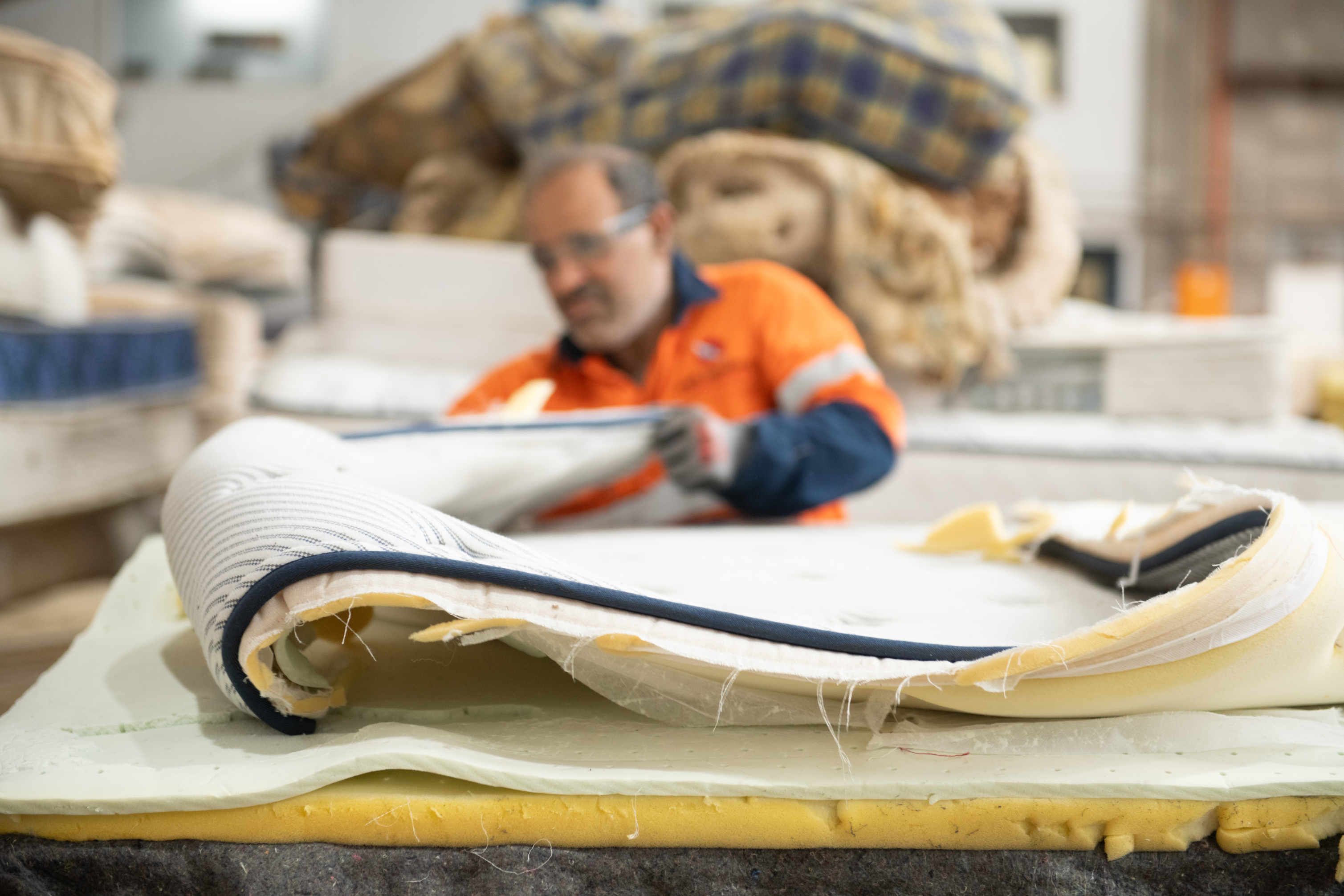
At Soft Landing, when we look at mattresses, we don’t see waste – we see valuable resources ready to be recovered and put back into the economy. Through our manual dismantling process, we achieve an industry-leading reuse and recycling rate of up to 70%, giving steel, foam and timber a second life.
But the remaining 30% – made up of hard-to-recycle components like mixed textiles and contaminated or damaged timber – has historically gone to landfill.
“Mattress textiles are made up of blended fibres that are currently impossible to separate into recyclable components, making them one of the most challenging materials to recover,” explains David Petrie, Soft Landing General Manager. “Bed base timber presents similar challenges. While we reuse or recycle the majority, some timber components are unsuitable.”


Finding a solution for this final fraction became essential to achieving 100% diversion. In FY25, we identified Waste-to-Energy as the pathway to close the gap.
Waste-to-Energy (WtE) refers to processes that convert waste materials into usable energy – from large-scale facilities that generate electricity from combustion, to producing Processed Engineered Fuel (PEF) for use in cement kilns. Materials like mattress textiles and timber offcuts have a high calorific value (HCV), making them well-suited for this process.
David says, “We knew that if we wanted to get closer to 100% diversion, we needed a solution for textiles and residual timber. Waste-to-Energy gives us that option, without compromising our focus on higher-value recovery first.”
Over the past year, we moved from planning to action, completing our first full-scale WtE trials at our Smithfield and Perth sites.
At Smithfield, we successfully shredded and processed three tonnes of mattress textiles, proving the material could be converted into PEF. Timber that can’t be reused or recycled is already being sent via this pathway. Meanwhile, at our Perth site, we’ve commenced sending mattress textiles to one of Australia’s first large-scale WtE facilities.
“This trial confirmed we could safely and efficiently process textiles and timber for WtE – a significant milestone in our journey toward full-scale diversion. We’re now moving ahead with installing dedicated equipment at Smithfield so textile processing can become part of our regular operations.”
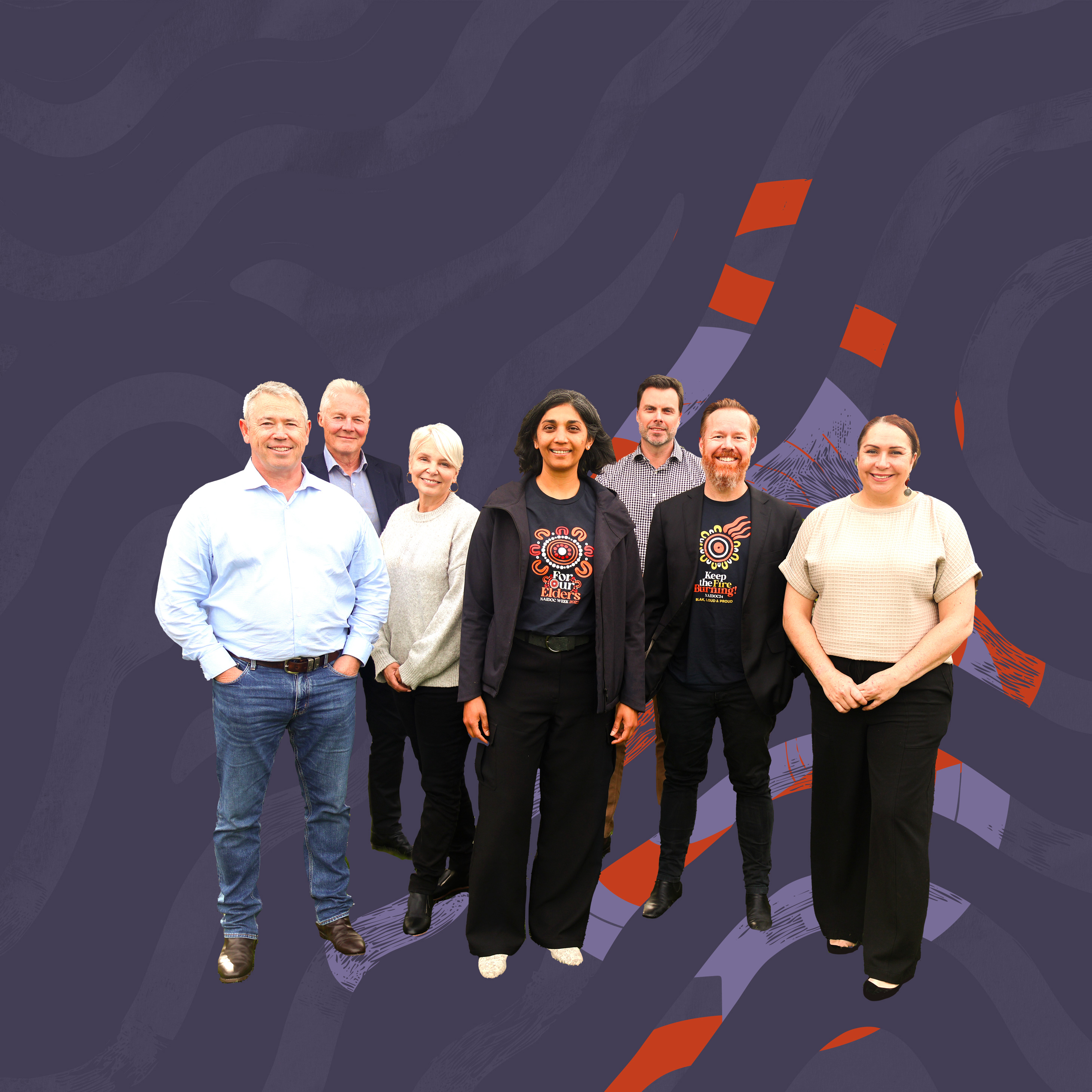
David Petrie General Manager Soft Landing
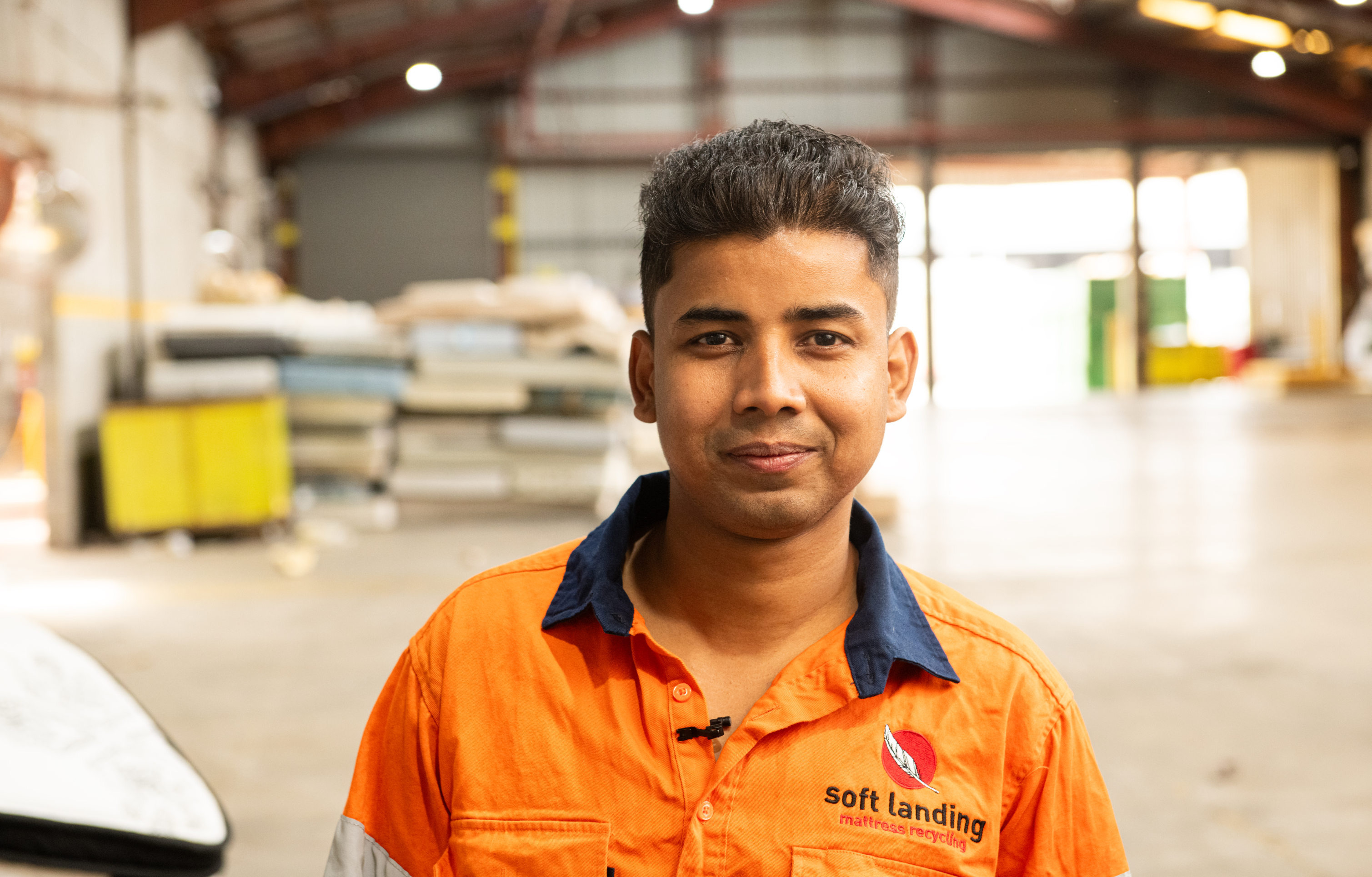
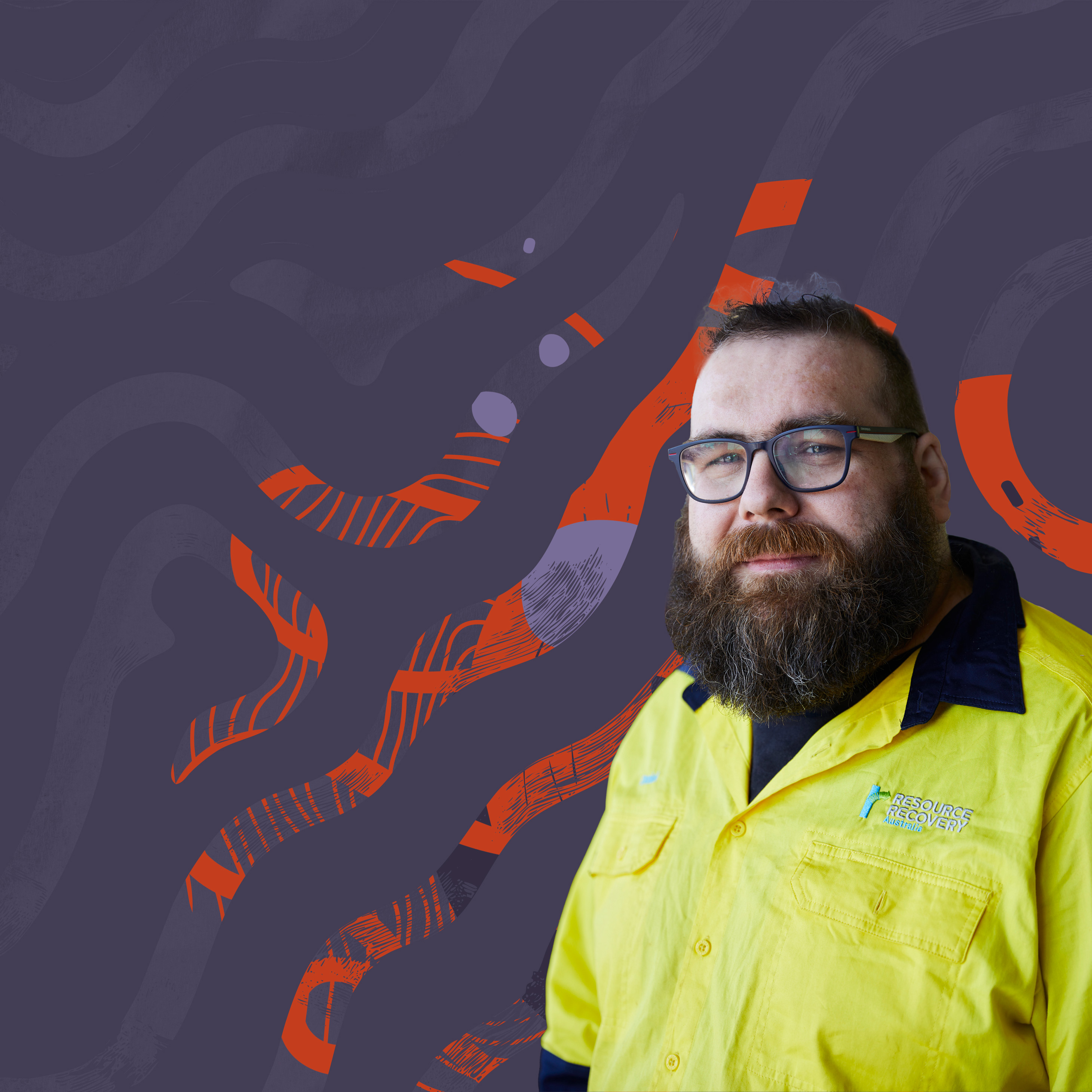
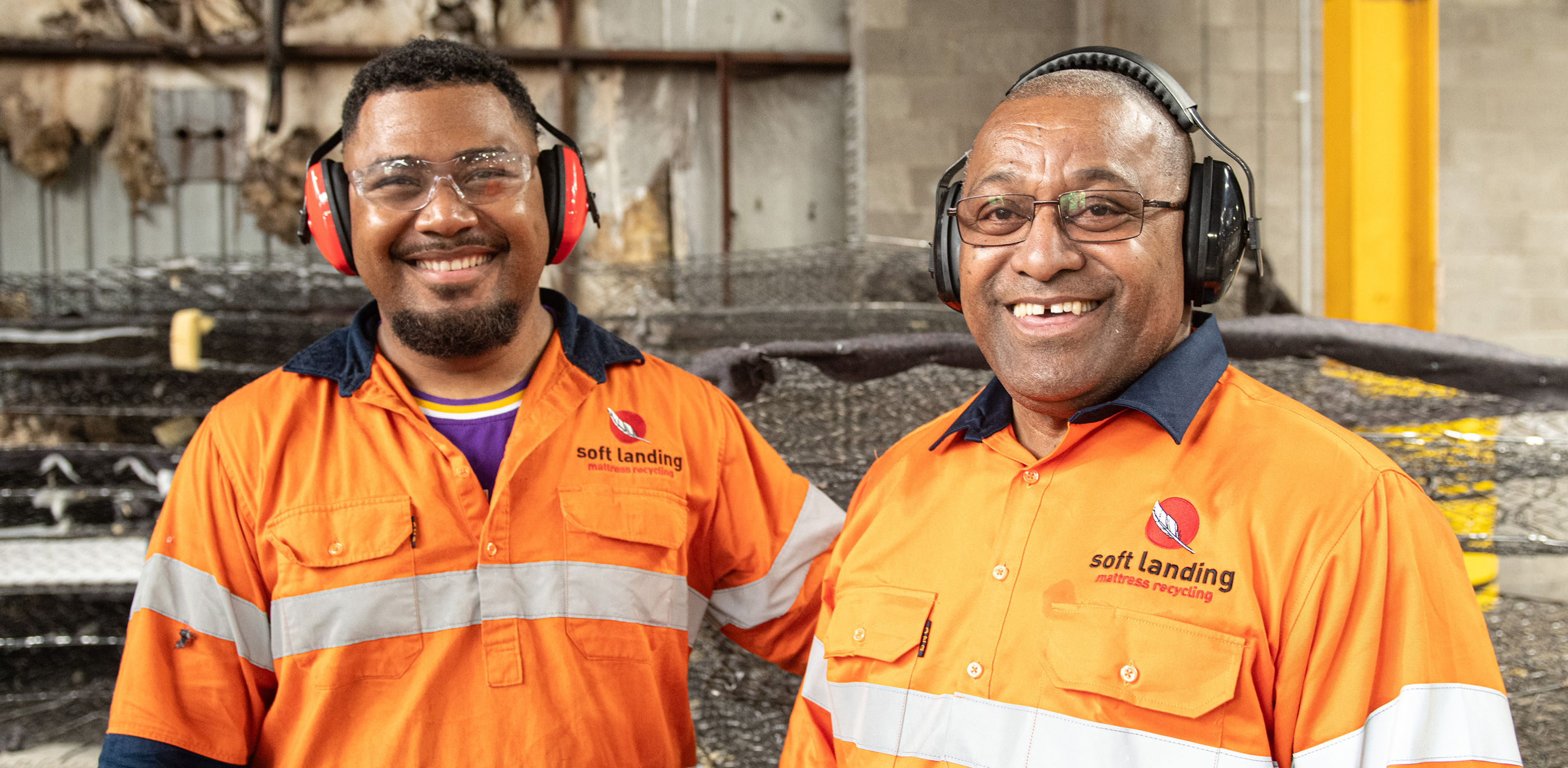
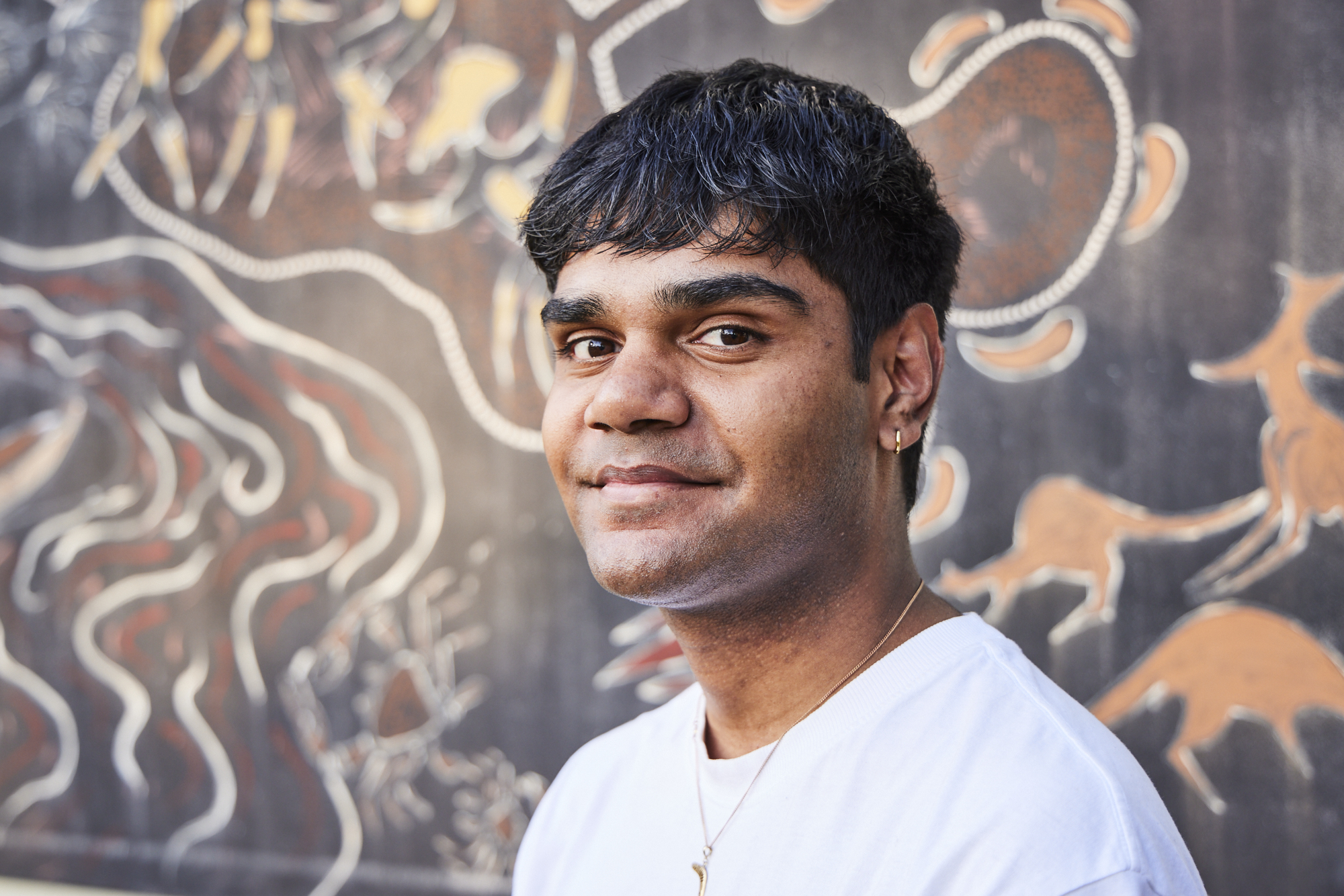
Mohammed – Soft Landing Smithfield
David adds, “We see Waste-to-Energy as a step along the path to end mattresses in landfill. As soon as higher-value recovery pathways become available, we’ll be ready to move materials up the waste hierarchy.”
“Councils can confidently partner with Soft Landing knowing we’re an operationally excellent social enterprise achieving positive outcomes for people and planet,” David says. “And at the same time, we’re meeting their 100% diversion targets. It’s an assurance that nothing is left behind.”
OUR IMPACT